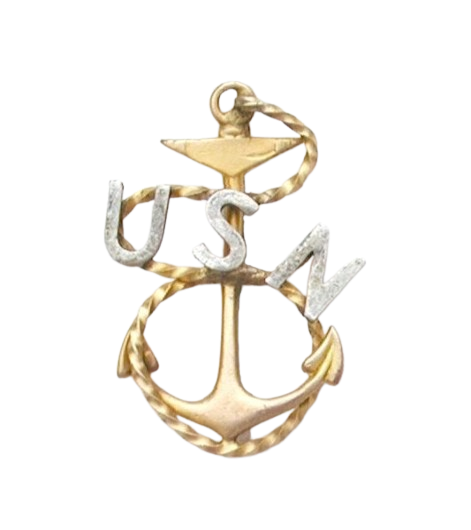
The recipients listed here were verified to have held chief petty officer rank at the time of the act that earned them the Medal of Honor. Those who had previously been chiefs, or would later become chiefs, are not included — with two noted exceptions from World War II (Finn and Reeves), who were “then CPOs” and are honored by long tradition on this roster.
Several rating titles require explanation. “Chief Machinist” (without “Mate”) was a chief petty officer rating that existed from 1893 to 1904, when Navy General Order 178 added “Mate” to the title. “Hospital Steward” was the chief petty officer title in the Hospital Corps from 1898 to 1916. “Chief Boatswain,” by contrast, was a chief warrant officer — not a CPO — while “Chief Boatswain’s Mate” was. The rate of Chief Petty Officer was established on 1 April 1893; no recipient predates that milestone.
Peacetime Medal of Honor awards are included for actions through 1940. An act of Congress in 1963 limited the award to acts of valor in combat against an enemy force; no peacetime Medal of Honor has been awarded since.
Modern Era — 2002 & 2012
Operation Enduring Freedom — Afghanistan — 8–9 December 2012
Naval Special Warfare — Afghanistan
Edward C. Byers Jr.
Master Chief Special Warfare Operator (SOCM)
On the night of 8–9 December 2012, Edward Byers was a team member on a hostage rescue mission in Afghanistan during Operation Enduring Freedom. As the rescue force approached the target building, an enemy sentry detected them and darted back inside. When the lead assaulter engaged the sentry, Byers sprinted to the door and stood in the doorway — fully exposed to enemy fire — ripping down six layers of heavy blankets fastened to the ceiling and walls to clear a path into the room. The first assaulter pushed through and was mortally wounded by enemy fire from within.
Byers, completely aware of the threat inside, rushed in and engaged an enemy guard. He tackled a second adult male — confirmed him not to be the hostage — and engaged him. Hearing the American hostage respond in English to his teammates’ calls, Byers raced toward the voice and threw himself on top of the hostage, shielding him with his own body from the intense fire within the small room. While covering the hostage, Byers immobilized another guard with his bare hands and restrained him until a teammate could eliminate the threat. His actions saved the lives of the hostage and several of his teammates.
Byers received the Medal of Honor on 29 February 2016, from President Obama.
Read official citation
For conspicuous gallantry and intrepidity at the risk of his life above and beyond the call of duty as a Hostage Rescue Force Team Member in Afghanistan in support of Operation ENDURING FREEDOM from 8 to 9 December 2012. As the rescue force approached the target building, an enemy sentry detected them and darted inside to alert his fellow captors. The sentry quickly reemerged, and the lead assaulter attempted to neutralize him. Chief Byers with his team sprinted to the door of the target building. As the primary breacher, Chief Byers stood in the doorway fully exposed to enemy fire while ripping down six layers of heavy blankets fastened to the inside ceiling and walls to clear a path for the rescue force. The first assaulter pushed his way through the blankets, and was mortally wounded by enemy small arms fire from within. Chief Byers, completely aware of the imminent threat, fearlessly rushed into the room and engaged an enemy guard aiming an AK-47 at him. He then tackled another adult male who had darted towards the corner of the room. During the ensuing hand-to-hand struggle, Chief Byers confirmed the man was not the hostage and engaged him. As other rescue team members called out to the hostage, Chief Byers heard a voice respond in English and raced toward it. He jumped atop the American hostage and shielded him from the high volume of fire within the small room. While covering the hostage with his body, Chief Byers immobilized another guard with his bare hands, and restrained the guard until a teammate could eliminate him. His bold and decisive actions under fire saved the lives of the hostage and several of his teammates. By his undaunted courage, intrepid fighting spirit, and unwavering devotion to duty in the face of near certain death, Chief Petty Officer Byers reflected great credit upon himself and upheld the highest traditions of the United States Naval Service.
Operation Anaconda — Takur Ghar, Afghanistan — 4 March 2002
Naval Special Warfare — Takur Ghar, Afghanistan
Britt K. Slabinski
Master Chief Special Warfare Operator (SOCM) — Senior Chief (SOCS) at time of action
In the early hours of 4 March 2002, Britt Slabinski led a reconnaissance team to a 10,000-foot snow-covered peak in Takur Ghar, Afghanistan, during Operation Anaconda. Their insertion helicopter was struck by rocket-propelled grenades and small arms fire from undetected enemy positions. The aircraft lurched violently, ejecting one teammate — Petty Officer Neil Roberts — onto the mountain before the crippled helicopter was forced to crash-land far below in the valley. Roberts was alone on an enemy-held peak in the dark.
Slabinski immediately rallied his five remaining team members and marshaled supporting assets for an assault to go back for Roberts. During their reinsertion, the team took fire from three directions simultaneously. One teammate started moving uphill toward an enemy strongpoint. Without hesitation, Slabinski charged directly into enemy fire to join him, and together they assaulted and cleared the first enemy bunker. Machine gun fire from a second hardened position — only twenty meters away — then swept the area. Slabinski repeatedly exposed himself to deadly fire to personally engage the bunker and orient his team’s response.
After several teammates became casualties and the position untenable, Slabinski maneuvered his team, directed air strikes in extremely close proximity to their position, and called for reinforcements. As daylight came and accurate mortar fire drove the team down the sheer mountainside, Slabinski carried a seriously wounded teammate through deep snow while continuing to call fire on pursuing enemy. For the next fourteen hours, he stabilized his casualties and maintained the fight until the position was secured and his team was extracted.
Slabinski received the Medal of Honor on 24 May 2018, from President Trump, at which time he held the rank of Master Chief Special Warfare Operator (SOCM).
Read official citation
For conspicuous gallantry and intrepidity at the risk of his life above and beyond the call of duty while assigned to a Joint Task Force in support of Operation ENDURING FREEDOM. In the early morning of 4 March 2002, Senior Chief Special Warfare Operator Slabinski led a reconnaissance team to its assigned area atop a 10,000-foot snow-covered mountain. Their insertion helicopter was suddenly riddled with rocket-propelled grenades and small arms fire from previously undetected enemy positions. The crippled helicopter lurched violently and ejected one teammate onto the mountain before the pilots were forced to crash land in the valley far below. Senior Chief Slabinski boldly rallied his five remaining team members and marshalled supporting assets for an assault to rescue their stranded teammate. During reinsertion the team came under fire from three directions, and one teammate started moving uphill toward an enemy strongpoint. Without regard for his own safety, Senior Chief Slabinski charged directly toward enemy fire to join his teammate. Together, they fearlessly assaulted and cleared the first bunker they encountered. The enemy then unleashed a hail of machine gun fire from a second hardened position only twenty meters away. Senior Chief Slabinski repeatedly exposed himself to deadly fire to personally engage the second enemy bunker and orient his team’s fires in the furious, close-quarters firefight. Proximity made air support impossible, and after several teammates became casualties, the situation became untenable. Senior Chief Slabinski maneuvered his team to a more defensible position, directed air strikes in very close proximity to his team’s position, and requested reinforcements. As daylight approached, accurate enemy mortar fire forced the team further down the sheer mountainside. Senior Chief Slabinski carried a seriously wounded teammate through deep snow and led a difficult trek across precipitous terrain while calling in fire on the enemy, which was engaging the team from the surrounding ridges. Throughout the next 14 hours, Senior Chief Slabinski stabilized the casualties and continued the fight against the enemy until the hill was secured and his team was extracted. By his undaunted courage, bold initiative, leadership, and devotion to duty, Senior Chief Slabinski reflected great credit upon himself and upheld the highest traditions of the United States Naval Service.
World War II — 1941–1945
Coral Sea — USS Neosho — 7 May 1942 posthumous
USS Neosho — Coral Sea
Oscar Verner Peterson †
Chief Watertender
Born 27 August 1899 in Prentice, Wisconsin, Oscar Peterson served as Chief Watertender aboard the fleet oiler USS Neosho. On 7 May 1942, during a Japanese aerial attack in the Coral Sea, the Neosho was struck by bombs and strafed repeatedly. The other members of Peterson’s repair party were all wounded or incapacitated. Peterson, severely wounded himself and alone, closed the bulkhead stop valves — work that required moving through spaces already damaged by the attack. In doing so he received additional burns that resulted in his death. His spirit of self-sacrifice ensured that those valves were closed and that the ship’s flooding was contained.
Medal of Honor awarded posthumously.
Read official citation
For extraordinary courage and conspicuous heroism above and beyond the call of duty while in charge of a repair party during an attack on the U.S.S. NEOSHO by enemy Japanese aerial forces on 7 May 1942. Lacking assistance because of injuries to the other members of his repair party and severely wounded himself, Peterson, with no concern for his own life, closed the bulkhead stop valves and in so doing received additional burns which resulted in his death. His spirit of self-sacrifice and loyalty, characteristic of a fine seaman, was in keeping with the highest traditions of the U.S. Naval Service. He gallantly gave his life in the service of his country.
Pearl Harbor — 7 December 1941
Japan’s surprise attack on 7 December 1941 killed 2,403 Americans and plunged the nation into war. Three Chief Petty Officers — at two separate installations — distinguished themselves in the chaos of that morning. Two of the three (Finn and Reeves) were CPOs at the time of the action but received the Medal of Honor at higher ranks. Per long tradition, they are honored here.
John William Finn
Aviation Ordnanceman Chief (AOC) — received MOH as Lieutenant
Born: 23 July 1909, Los Angeles, California — NAS Kaneohe Bay
During the first Japanese attack on NAS Kaneohe Bay, Finn secured and manned a .50-caliber machinegun on an instruction stand in a completely exposed position on the parking ramp, directly under enemy strafing fire. Painfully wounded many times, he continued to man the gun and return fire throughout the entire attack. Only by direct orders was he persuaded to leave for medical attention. Following first aid, he returned to the area and supervised the rearming of returning aircraft. “Then a CPO.”
Read official citation
For extraordinary heroism distinguished service, and devotion above and beyond the call of duty. During the first attack by Japanese airplanes on the Naval Air Station, Kaneohe Bay, on 7 December 1941, Lt. Finn promptly secured and manned a .50-caliber machinegun mounted on an instruction stand in a completely exposed section of the parking ramp, which was under heavy enemy machinegun strafing fire. Although painfully wounded many times, he continued to man this gun and to return the enemy’s fire vigorously and with telling effect throughout the enemy strafing and bombing attacks and with complete disregard for his own personal safety. It was only by specific orders that he was persuaded to leave his post to seek medical attention. Following first-aid treatment, although obviously suffering much pain and moving with great difficulty, he returned to the squadron area and actively supervised the rearming of returning planes. His extraordinary heroism and conduct in this action were in keeping with the highest traditions of the U.S. Naval Service.
Thomas J. Reeves †
Radio Machinist Chief (RMC) — received MOH as Radio Electrician (WO), posthumously
Born: 9 December 1895, Thomaston, Connecticut — USS California
After the mechanized ammunition hoists were knocked out in USS California, Reeves on his own initiative worked in a burning passageway to maintain an ammunition supply by hand to the antiaircraft guns — carrying on until he was overcome by smoke and fire, which caused his death. “Then a CPO.”
Read official citation
For distinguished conduct in the line of his profession, extraordinary courage and disregard of his own safety during the attack on the Fleet in Pearl Harbor, by Japanese forces on 7 December 1941. After the mechanized ammunition hoists were put out of action in the U.S.S. California, Reeves, on his own initiative, in a burning passageway, assisted in the maintenance of an ammunition supply by hand to the antiaircraft guns until he was overcome by smoke and fire, which resulted in his death.
Peter Tomich †
Chief Watertender
Born: 3 June 1893, Prolog, Austria — USS Utah
As USS Utah capsized under torpedo hits, Tomich remained at his station in the engineering plant. He secured all boilers and ensured that all fireroom personnel had evacuated their stations before he could save himself. The ship capsized before he could escape. He gave his life so that those in his charge could live.
Read official citation
For distinguished conduct in the line of his profession, and extraordinary courage and disregard of his own safety, during the attack on the Fleet in Pearl Harbor by the Japanese forces on 7 December 1941. Although realizing that the ship was capsizing, as a result of enemy bombing and torpedoing, Tomich remained at his post in the engineering plant of the U.S.S. UTAH, until he saw that all boilers were secured and all fireroom personnel had left their stations, and by so doing lost his own life.
Between the Wars — 1927 & 1939
Submarine USS Squalus — Portsmouth — 23 May 1939
On the morning of 23 May 1939, the submarine USS Squalus sank in 240 feet of water off the Isle of Shoals during a test dive. The main induction valve failed; the aft compartments flooded instantly, killing 26 men. Thirty-three survivors waited in the sealed forward sections — in cold, dark water, with dwindling air. What followed was the first successful rescue using the McCann Rescue Chamber, a device never before used in a real emergency. Three Chief Petty Officers directed the diving and rescue operations.
William Badders
Chief Machinist’s Mate
Born: 16 September 1900, Harrisburg, Illinois
Senior member of the rescue chamber crew, Badders directed chamber operations and personally made the final — most hazardous — descent into the flooded after section to search for any possible survivors, knowing there was no means of rescue if he became incapacitated. He also made important salvage dives. MOH awarded. Also held the Navy Cross and Navy-Marine Corps Medal.
Read official citation
For extraordinary heroism in the line of his profession during the rescue and salvage operations following the sinking of the U.S.S. SQUALUS on 23 May 1939. During the rescue operations, Badders, as senior member of the rescue chamber crew, made the last extremely hazardous trip of the rescue chamber to attempt to rescue any possible survivors in the flooded after portion of the SQUALUS. He was fully aware of the great danger involved in that if he and his assistant became incapacitated, there was no way in which either could be rescued. During the salvage operations, Badders made important and difficult dives under the most hazardous conditions. His outstanding performance of duty contributed much to the success of the operations and characterizes conduct far above and beyond the ordinary call of duty.
Orson L. Crandall
Chief Boatswain’s Mate
Born: 2 February 1903, St. Joseph, Missouri
Master diver throughout the rescue and salvage operations, directing diving operations and making important and difficult dives under the most hazardous conditions. MOH awarded.
Read official citation
For extraordinary heroism in the line of his profession as a master diver throughout the rescue and salvage operations following the sinking of the U.S.S. SQUALUS on 23 May 1939. His leadership and devotion to duty in directing diving operations and in making important and difficult dives under the most hazardous conditions characterize conduct far above and beyond the ordinary call of duty.
James Harper McDonald
Chief Metalsmith
Born: 15 July 1900, Scotland
Master diver; directed diving operations and made important and difficult dives under the most hazardous conditions throughout the rescue and salvage operations. MOH awarded.
Read official citation
For extraordinary heroism in the line of his profession as a master diver throughout the rescue and salvage operations following the sinking of the U.S.S. SQUALUS on 23 May 1939. His leadership, masterly skill, general efficiency, and untiring devotion to duty in directing diving operations, and in making important and difficult dives under the most hazardous conditions, characterize conduct far above and beyond the ordinary call of duty.
Submarine USS S-4 — Off Provincetown — 18 December 1927
Diving Operations — Off Provincetown, Massachusetts
Thomas Eadie
Chief Gunner’s Mate
Born 7 April 1887 in Scotland, Thomas Eadie served as a master Navy diver. On 17 December 1927, the submarine USS S-4 was rammed by the Coast Guard cutter Paulding off Provincetown and sank with all 40 men aboard. During subsequent salvage operations on 18 December, Chief Torpedoman Michels descended to 102 feet and became fatally entangled — air hose and lifeline fouled by a wire hawser, unable to move in any direction.
Eadie immediately volunteered. He descended alone into the dark, cold water and spent two hours of extremely dangerous work — at depth, under pressure, in poor visibility — carefully untangling the fouled lines. He freed Michels, who was brought to the surface alive. Thomas Eadie already held the Navy Cross; this act earned him the Medal of Honor as well.
Read official citation
For display of extraordinary heroism in the line of his profession above and beyond the call of duty on 18 December 1927, during the diving operations in connection with the sinking of the U.S.S. S-4 with all on board, as a result of a collision off Provincetown, Mass. On this occasion when Michels, Chief Torpedoman, U.S. Navy, while attempting to connect an airline to the submarine at a depth of 102 feet became seriously fouled, Eadie, under the most adverse diving conditions, deliberately, knowingly, and willingly took his own life in his hands by promptly descending to the rescue in response to the desperate need of his companion diver. After 2 hours of extremely dangerous and heartbreaking work, by his cool, calculating, and skillful labors, he succeeded in his mission and brought Michels safely to the surface.
World War I — 1917–1918
USS Chestnut Hill — 9 October 1918
USS Chestnut Hill — At Sea
Oscar Schmidt Jr.
Chief Gunner’s Mate
Born 25 March 1896 in Philadelphia, Pennsylvania, Oscar Schmidt Jr. served as Chief Gunner’s Mate aboard USS Chestnut Hill. On 9 October 1918, the submarine chaser 219 exploded and caught fire alongside. Schmidt saw a man hanging from the chaser’s bow with his legs partly blown off. He jumped overboard, swam to the burning vessel, and carried the man from the bow to the stern — navigating a ship in flames. He then attempted to pass through the fire amidships to reach another seriously burned man. Unable to break through, he pulled that man aboard at the stern when he fell into the water. Medal of Honor awarded by G.O. No. 450, 1919.
Read official citation
For gallant conduct and extraordinary heroism while attached to the U.S.S. CHESTNUT HILL, on the occasion of the explosion and subsequent fire on board the submarine chaser 219. Schmidt, seeing a man, whose legs were partly blown off, hanging on a line from the bow of the 219, jumped overboard, swam to the sub chaser and carried him from the bow to the stern where a member of the 219’s crew helped him land the man on the afterdeck of the submarine. Schmidt then endeavored to pass through the flames amidships to get another man who was seriously burned. This he was unable to do, but when the injured man fell overboard and drifted to the stern of the chaser Schmidt helped him aboard.
G.O. No. 450, 1919
Naval Air Station Pensacola — 25 September 1918
Naval Air Station, Pensacola, Florida
Francis Edward Ormsbee Jr.
Chief Machinist’s Mate
Born 30 April 1892 in Providence, Rhode Island, Francis Ormsbee served as Chief Machinist’s Mate at Naval Air Station Pensacola. On 25 September 1918, while aloft as a passenger with Ensign Jova, Ormsbee watched a plane go into a tailspin and crash into the water three-quarters of a mile away. They landed nearby. Without hesitation, Ormsbee went overboard and swam to the wreck — submerged except for the two wing tips. He partially extricated the gunner and held his head above water until a speedboat arrived to complete the rescue. He then dove repeatedly into the tangled submerged wreckage, cutting his hands badly, in desperate attempts to reach the pilot — but was too late to save his life. Medal of Honor awarded by G.O. No. 436, 1918.
Read official citation
For extraordinary heroism while attached to the Naval Air Station, Pensacola, Fla., on 25 September 1918. While flying with Ens. J.A. Jova, Ormsbee saw a plane go into a tailspin and crash about three-quarters of a mile to the right. Having landed near by, Ormsbee lost no time in going overboard and made for the wreck, which was all under water except the 2 wing tips. He succeeded in partially extricating the gunner so that his head was out of the water, and held him in this position until the speedboat arrived. Ormsbee then made a number of desperate attempts to rescue the pilot, diving into the midst of the tangled wreckage although cut about the hands, but was too late to save his life.
G.O. No. 436, 1918
USS Remlik — North Atlantic — 17 December 1917
USS Remlik — At Sea
John MacKenzie
Chief Boatswain’s Mate
Born 7 July 1886 in Bridgeport, Connecticut, John MacKenzie served as Chief Boatswain’s Mate aboard the patrol vessel USS Remlik. On 17 December 1917, the Remlik encountered a heavy gale on the North Atlantic. A Sperry depth charge was washed from the taffrail and fell back aboard the pitching deck. With the ship plunging into the seas, the charge could not safely be moved. If it detonated, the ship and crew were lost.
On his own initiative, MacKenzie went aft, sat down on the depth charge, and held it in place with his body until the ship could be brought around into the sea and the charge made safe. In doing so he absorbed the entire risk that the charge could have killed everyone aboard. Medal of Honor awarded by G.O. No. 391, 1918.
Read official citation
For extraordinary heroism while serving on board the U.S.S. REMLIK, on the morning of 17 December 1917, when the REMLIK encountered a heavy gale. During this gale, there was a heavy sea running. The depth charge box on the taffrail aft, containing a Sperry depth charge, was washed overboard, the depth charge itself falling inboard and remaining on deck. MacKenzie, on his own initiative, went aft and sat down on the depth charge, as it was impracticable to carry it to safety until the ship was headed up into the sea. In acting as he did, MacKenzie exposed his life and prevented a serious accident to the ship and probable loss of the ship and the entire crew.
G.O. No. 391, 1918
Peacetime Actions — 1915–1916
USS Memphis — Santo Domingo — 29 August 1916 posthumous
USS Memphis — Santo Domingo City, Dominican Republic
George William Rud †
Chief Machinist’s Mate
Born 7 October 1883 in Minneapolis, Minnesota, George Rud served as Chief Machinist’s Mate aboard USS Memphis. On 29 August 1916, a catastrophic storm struck suddenly while the ship was anchored off Santo Domingo City, driving massive waves that destroyed the vessel. Rud took his station in the engine room and remained at his post as scalding steam and rushing seawater flooded his compartment. He received burns so severe that he died immediately. He gave his life at his station.
Medal of Honor awarded posthumously, 1 August 1932.
Read official citation
For extraordinary heroism in the line of his profession while attached to the U.S.S. MEMPHIS, at a time when that vessel was suffered total destruction from a hurricane while anchored off Santo Domingo City, 29 August 1916. C.M.M. Rud took his station in the engine-room and remained at his post amidst scalding steam and the rushing of thousands of tons of water into his department, receiving serious burns from which he immediately died.
1 August 1932 (posthumous)
USS Decatur — 9 September 1915
USS Decatur
Eugene P. Smith
Chief Watertender
Born 8 August 1871 in Truney, Illinois, Eugene Smith served as Chief Watertender aboard USS Decatur. On 9 September 1915, an explosion wracked the ship. Smith entered the damaged compartments several times in succession to locate and rescue injured shipmates trapped inside — each entry at significant personal risk from fire, structural damage, or residual hazard. Medal of Honor awarded by G.O. No. 189, 8 February 1916.
Read official citation
Attached to U.S.S. DECATUR; for several times entering compartments on board of DECATUR immediately following an explosion on board that vessel, 9 September 1915, and locating and rescuing injured shipmates.
G.O. No. 189, 8 February 1916
Submarine USS F-4 — Off Honolulu — 17 April 1915
Diving Operations — Honolulu, Territory of Hawaii
Frank William Crilley
Chief Gunner’s Mate
The submarine USS F-4 sank off Honolulu on 25 March 1915 with all 21 men aboard — no survivors. During the salvage effort on 17 April, diver William F. Loughman (another chief gunner’s mate) descended to the wreck at 304 feet and, at a depth of 250 feet, became fatally entangled in a wire hawser — unable to ascend or descend, air and lifeline fouled. The time he had already spent at crushing pressure meant any further delay risked his life.
Frank William Crilley, born 13 September 1883 in Trenton, New Jersey, instantly volunteered, donned a diving suit, and descended. For 2 hours and 11 minutes at depth, in cold dark water, he worked to untangle the snarled lines. He freed Loughman, who was brought to the surface alive. Medal of Honor awarded 19 November 1928.
Read official citation
For display of extraordinary heroism in the line of his profession above and beyond the call of duty during the diving operations in connection with the sinking in a depth of water 304 feet, of the U.S.S. F-4 with all on board, as a result of loss of depth control, which occurred off Honolulu, T.H., on 25 March 1915. On 17 April 1915, William F. Loughman, chief gunner’s mate, U.S. Navy, who had descended to the wreck and had examined one of the wire hawsers attached to it, upon starting his ascent, and when at a depth of 250 feet beneath the surface of the water, had his lifeline and air hose so badly fouled by this hawser that he was unable to free himself; he could neither ascend nor descend. On account of the length of time that Loughman had already been subjected to the great pressure due to the depth of water, and of the uncertainty of the additional time he would have to be subjected to this pressure before he could be brought to the surface, it was imperative that steps be taken at once to clear him. Instantly, realizing the desperate case of his comrade, Crilley volunteered to go to his aid, immediately donned a diving suit and descended. After a lapse of time of 2 hours and 11 minutes, Crilley was brought to the surface, having by a superb exhibition of skill, coolness, endurance and fortitude, untangled the snarl of lines and cleared his imperiled comrade, so that he was brought, still alive, to the surface.
19 November 1928
Mexican Campaign — Vera Cruz, 1914
USS Utah — Vera Cruz, Mexico
George Bradley
Chief Gunner’s Mate
Born 5 December 1881 in New York City, George Bradley served as Chief Gunner’s Mate aboard USS Utah during the American landing at Vera Cruz in April 1914. When the landing party came under fire from Mexican forces, Bradley was in charge of the ammunition party and special details ashore, displaying meritorious service under fire throughout the operation.
The Medal of Honor was awarded by G.O. No. 117, 13 September 1923 — nine years after the action. It was presented personally by President Coolidge at the White House on 4 October 1923.
Read official citation
For meritorious service under fire on the occasion of the landing of the American naval forces at Vera Cruz in 1914. C.G. Bradley was then attached to the U.S.S. UTAH, as a chief gunner’s mate, and was in charge of the ammunition party and special details at Vera Cruz. (Medal presented by President Coolidge at the White House on 4 October 1923.)
G.O. No. 117, 13 September 1923
Peacetime Actions — 1899–1913
Until 1963, an act of Congress permitted the Medal of Honor to be awarded for extraordinary heroism in peacetime naval service — in recognition of the unique hazards of life at sea: fires in confined spaces, men overboard in heavy weather, boiler explosions, flooding, and the dangers of early diving. The entries below represent non-combat actions spanning the years 1899 to 1913.
USS North Dakota — Fire at Sea — 8 September 1910
On 8 September 1910, a serious fire broke out aboard the battleship USS North Dakota. Four Chief Petty Officers distinguished themselves in fighting the fire, and all four received the Medal of Honor in the same general order.
August Holtz
Chief Watertender
Born: 12 February 1871, St. Louis, Missouri
Extraordinary heroism in the line of his profession during the fire. MOH: G.O. No. 83, 4 October 1910.
Read official citation
On board the U.S.S. NORTH DAKOTA, for extraordinary heroism in the line of his profession during the fire on board that vessel, 8 September 1910.
G.O. No. 83, 4 October 1910
Patrick Reid
Chief Watertender
Born: 17 June 1875, Dublin, Ireland
Extraordinary heroism in the line of his profession during the fire. MOH: G.O. No. 83, 4 October 1910.
Read official citation
For extraordinary heroism in the line of his profession during the fire on board the U.S.S. NORTH DAKOTA where Reid was serving, 8 September 1910.
G.O. No. 83, 4 October 1910
Thomas Stanton
Chief Machinist’s Mate
Born: 11 August 1869, Ireland
Extraordinary heroism in the line of his profession during the fire. MOH: G.O. No. 83, 4 October 1910.
Read official citation
For extraordinary heroism in the line of his profession during the fire on board the U.S.S. NORTH DAKOTA, 8 September 1910.
G.O. No. 83, 4 October 1910
Karl Westa
Chief Machinist’s Mate
Born: 8 April 1875, Norway
Extraordinary heroism in the line of his profession during the fire. MOH: G.O. No. 83, 4 October 1910.
Read official citation
On board the U.S.S. NORTH DAKOTA; for extraordinary heroism in the line of his profession during the fire on board that vessel, 8 September 1910.
G.O. No. 83, 4 October 1910
USS Hopkins Boiler Accident — 14 February 1910
USS Hopkins
Robert Earl Bonney
Chief Watertender
Robert Earl Bonney, a Chief Watertender from Tennessee, served aboard the destroyer USS Hopkins. On 14 February 1910, an accident occurred in one of the ship’s boilers. Bonney displayed extraordinary heroism in the line of his profession in responding to the emergency. Medal of Honor awarded for this action.
Read official citation
While serving on board the U.S.S. HOPKINS, Bonney displayed extraordinary heroism in the line of his profession on the occasion of the accident to one of the boilers of that vessel, 14 February 1910.
Hampton Roads — 4 January 1910
USS Birmingham — Hampton Roads, Virginia
William E. Snyder
Chief Electrician
Born 24 February 1883 in South Bethlehem (now Bethlehem), Pennsylvania, William Snyder served as Chief Electrician aboard USS Birmingham. On 4 January 1910, G. H. Kephart, a seaman, fell overboard at Hampton Roads, Virginia. Snyder entered the water and rescued him. Medal of Honor awarded by G.O. No. 58, 2 March 1910.
Read official citation
Serving on board the U.S.S. BIRMINGHAM, for extraordinary heroism, rescuing G.H. Kephart, seaman, from drowning at Hampton Roads, Va., 4 January 1910.
G.O. No. 58, 2 March 1910
USS Kearsarge Turret Fire — 13 April 1906
USS Kearsarge — Target Practice
Isidor Nordstrom
Chief Boatswain’s Mate (at time of action)
Born 24 May 1876 in Göteborg, Sweden, Isidor Nordstrom served as Chief Boatswain’s Mate aboard USS Kearsarge. On 13 April 1906, a disastrous fire ignited accidentally from powder charges in the ship’s forward turret during target practice. Nordstrom was among the first to enter the burning turret to help bring out the injured men.
The Medal of Honor was awarded eighteen years later by G.O. No. 142, 4 December 1924 — by which time Nordstrom had risen to Chief Boatswain, a chief warrant officer rank. His citation explicitly acknowledges this, noting that “Chief Boatswain Nordstrom, then chief boatswain’s mate” had performed the act.
Read official citation
For gallant conduct upon the occasion of the disastrous fire of accidentally ignited powder charges, which occurred in the forward turret of the U.S.S. KEARSAGE during target practice on 13 April 1906. Chief Boatswain Nordstrom, then chief boatswain’s mate was among the first to enter the turret in order to assist in bringing out the injured.
G.O. No. 142, 4 December 1924
USS Bennington Boiler Explosion — San Diego — 21 July 1905
On 21 July 1905, a boiler exploded aboard USS Bennington at anchor in San Diego harbor. The blast killed 66 men and wounded 47 more — one of the worst peacetime disasters in Navy history to that time. Two chief petty officers received the Medal of Honor for their actions in the aftermath.
John J. Clausey
Chief Gunner’s Mate
Accredited to: California
Displayed extraordinary heroism during and following the explosion. MOH: G.O. No. 13, 5 January 1906. Record note: His true name was Joannes Joseph Closley, born in Lancashire, England, in 1877. He enlisted under the name Clausey with a fabricated California birthplace.
Read official citation
On board the U.S.S. BENNINGTON for extraordinary heroism displayed at the time of the explosion of a boiler of that vessel at San Diego, Calif., 21 July 1905.
G.O. No. 13, 5 January 1906
William Sidney Shacklette
Hospital Steward
Born: 17 May 1880, Delaplane, Virginia
Displayed extraordinary heroism during and following the explosion. MOH: G.O. No. 13, 5 January 1906. Note: In 1905, all Navy Hospital Stewards held chief petty officer rank. The rating was reorganized in 1916.
Read official citation
For extraordinary heroism while serving on the U.S.S. BENNINGTON at the time of the explosion of a boiler of that vessel at San Diego, Calif., 21 July 1905.
G.O. No. 13, 5 January 1906
USS Iowa — 25 January 1905
USS Iowa
Johannes J. Johannessen
Chief Watertender
Born 13 May 1872 in Bodø, Norway, Johannes Johannessen enlisted in the Navy at Yokohama, Japan. On 25 January 1905, the manhole plate of boiler D aboard USS Iowa blew out — a sudden, violent failure capable of sending scalding steam through the compartment. Johannessen displayed extraordinary heroism in the emergency. Medal of Honor awarded by G.O. No. 182, 20 March 1905.
Read official citation
Serving on board the U.S.S. IOWA, for extraordinary heroism at the time of the blowing out of the manhole plate of boiler D on board that vessel, 25 January 1905.
G.O. No. 182, 20 March 1905
USS Missouri Turret Fire — Off Pensacola — 13 April 1904
During target practice off Pensacola, Florida, on 13 April 1904, an explosion and fire broke out in the after turret of USS Missouri, killing 5 officers and 28 men. The ship was in imminent danger of total destruction. Two chief petty officers acted to save the vessel and the lives of her remaining crew.
Robert Edward Cox
Chief Gunner’s Mate (per citation)
Born: 22 December 1855, St. Albans, West Virginia
Cox’s prompt actions, along with two other gunner’s mates, brought the fire under control and saved the Missouri and her crew from destruction. His Medal of Honor was not awarded until G.O. No. 43, 14 April 1921 — 17 years later — because warrant officers were not eligible for the Medal until legislation passed that year. Medal presented by President Harding. Historical note: Cox had been warranted as Gunner on 11 April 1901, three years before the action; he was technically a warrant officer, not a CPO, on 13 April 1904. He is included by tradition on this roster.
Read official citation
For extraordinary heroism on U.S.S. MISSOURI 13 April, 1904. While at target practice off Pensacola, Fla., an accident occurred in the after turret of the MISSOURI whereby the lives of 5 officers and 28 men were lost. The ship was in imminent danger of destruction by explosion, and the prompt action of C.G. Cox and 2 gunners’ mates caused the fire to be brought under control, and the loss of the MISSOURI, together with her crew, was averted.
G.O. No. 43, 14 April 1921 (Medal presented by President Harding)
Mons Monssen
Chief Gunner’s Mate
Born: 20 January 1867, Norway
Monssen entered a burning magazine through the scuttle and began throwing water on the fire with his bare hands — until a hose could finally be passed to him. MOH: G.O. No. 160, 26 May 1904.
Read official citation
Serving on board the U.S.S. MISSOURI, for extraordinary heroism in entering a burning magazine through the scuttle and endeavoring to extinguish the fire by throwing water with his hands until a hose was passed to him, 13 April 1904.
G.O. No. 160, 26 May 1904
USS Raleigh — 25 January 1904
USS Raleigh
Robert Klein
Chief Carpenter’s Mate
Robert Klein entered the confined double bottoms of USS Raleigh — a space with little ventilation and no easy escape — to rescue shipmates who had been overcome by fumes from turpentine on 25 January 1904. He brought his crewmates out alive. Medal of Honor awarded by G.O. No. 173, 6 October 1904.
Record note: Official records give his birth as 11 November 1884 in Gerdonen, Germany. Genealogical research indicates he was born in 1848 — consistent with his death in Shanghai in 1931 at approximately age 83. His grave at Bubbling Well Cemetery, Shanghai, is lost; the cemetery was demolished in 1953–1954.
Read official citation
Serving on board the U.S.S. RALEIGH, for heroism in rescuing shipmates overcome in double bottoms by fumes of turpentine, 25 January 1904.
G.O. No. 173, 6 October 1904
Wreck of USS Leyden — 21 January 1903
USS Leyden — Off Block Island, Rhode Island
Michael Walsh
Chief Machinist
Michael Walsh served as Chief Machinist aboard USS Leyden when the vessel wrecked on 21 January 1903. He remained at his station in the engine room throughout the disaster, displaying heroism in the line of his profession. Born 27 July 1858 in Newport, Rhode Island — immigration records suggest he may have been born in Swansea, Wales. Medal of Honor awarded by G.O. No. 145, 26 December 1903.
Read official citation
Serving on board the U.S.S. LEYDEN; for heroism at the time of the wreck of that vessel, 21 January 1903.
G.O. No. 145, 26 December 1903
USS New York — Off Jamaica — 31 March 1899
USS New York — Caribbean
John Stokes
Chief Master-at-Arms
Born 12 June 1871 in New York City, John Stokes served as Chief Master-at-Arms aboard USS New York. On 31 March 1899, off the coast of Jamaica, Watertender Peter Mahoney went overboard. Stokes jumped into the sea without hesitation and assisted in Mahoney’s rescue. Medal of Honor awarded by G.O. No. 525, 29 July 1899.
Read official citation
On board the U.S.S. NEW YORK off the coast of Jamaica, 31 March 1899. Showing gallant conduct, Stokes jumped overboard and assisted in the rescue of Peter Mahoney, watertender, U.S. Navy.
G.O. No. 525, 29 July 1899
Philippines & China — 1899–1901
Siege of the Peking Legations — 28 June–17 August 1900
USS Newark (detached) — Peking, China
Carl Emil Petersen
Chief Machinist
While Clancy and Hamberger marched with the Seymour Expedition toward Tientsin, Carl Emil Petersen was dispatched separately — detached from USS Newark and sent to reinforce the American Legation guard in Peking. He arrived on 3 June 1900, a month before the siege formally began, and was the only machinist among the US defenders of the compound.
For 55 days — from 28 June to 17 August 1900 — Chinese Imperial Army and Boxer forces surrounded the legation quarter and subjected it to continuous attack. Petersen’s engineering skills were essential throughout: maintaining weapons (including Colt automatic guns), keeping mechanical systems operational, and supporting the construction of defensive barricades. The legations were finally relieved by the allied column on 14 August.
Born 24 August 1875 in Hamburg, Germany, Petersen left the Navy in 1902 and settled in New Jersey. He died 17 November 1971 in Edison, New Jersey, at the age of 96 — almost certainly the last surviving Navy Medal of Honor recipient from the Boxer Rebellion era, and a man whose life spanned from the age of the steam engine to the Apollo moon landings.
Medal of Honor awarded by G.O. No. 55, 19 July 1901.
Read official citation
In the presence of the enemy during the action at Peking, China, 28 June to 17 August 1900. During this period Chief Machinist Petersen distinguished himself by meritorious conduct.
G.O. No. 55, 19 July 1901
China Relief Expedition — Seymour Expedition — June 1900
In the summer of 1900, the Boxer Uprising in China threatened foreign nationals and besieged the international diplomatic legations in Peking. An international relief force — eight nations, approximately 2,100 men — set out from Tientsin on 10 June 1900 under British Vice Admiral Seymour. The American contingent numbered about 112 men, mostly from USS Newark, under Captain Bowman H. McCalla. Over the following two weeks, the force fought off repeated ambushes by Boxer and Imperial Chinese troops: a major attack on the supply train on 13 June, sustained combat on 20–21 June, and the assault on the Hsiku Arsenal north of Tientsin on 22 June. Two Chief Petty Officers from the Newark served in the thick of this fighting.
Joseph Clancy
Chief Boatswain’s Mate
Born: 29 September 1863, New York City
Distinguished himself by his conduct throughout the June 13, 20, 21, and 22 engagements. MOH: G.O. No. 55, 19 July 1901. Later commissioned as Lieutenant during World War I. Died 2 February 1929; buried Arlington National Cemetery.
Read official citation
In action with the relief expedition of the Allied forces in China, 13, 20, 21 and 22 June 1900. During this period and in the presence of the enemy, Clancy distinguished himself by his conduct.
G.O. No. 55, 19 July 1901
William Francis Hamberger
Chief Carpenter’s Mate
Born: 5 August 1870, Newark, New Jersey
Distinguished himself by meritorious conduct throughout the same four days of fighting. MOH: G.O. No. 55, 19 July 1901. Rose to Lieutenant Commander over his career. Died 1 September 1937, Washington, D.C.; buried Arlington National Cemetery, Section 6.
Read official citation
Fighting with the relief expedition of the Allied forces on 13, 20, 21 and 22 June 1900, Hamberger distinguished himself by meritorious conduct.
G.O. No. 55, 19 July 1901
Rescue Aboard USS Alliance — 28 May 1899
USS Alliance — Off Annapolis, Maryland
Patrick Shanahan
Chief Boatswain’s Mate
Patrick Shanahan served as Chief Boatswain’s Mate aboard USS Alliance, an apprentice training ship operating in Atlantic waters. On 28 May 1899, Quartermaster First Class William Steven went overboard and was drowning. Shanahan entered the water and rescued him. Born 6 November 1867 in County Limerick, Ireland, Shanahan went on to serve through World War I, rising temporarily to Lieutenant. He died 7 December 1937 in Brooklyn and is buried at Arlington National Cemetery.
Medal of Honor awarded by G.O. No. 534, 29 November 1899.
Record note: This action is historically listed under “Philippines/Samoa 1899–1913” — a filing convention in the original Navy records. USS Alliance was an Atlantic-based training ship; the action took place off Annapolis, Maryland.
Read official citation
On board the U.S.S. ALLIANCE, 28 May 1899. Displaying heroism, Shanahan rescued William Steven, quartermaster, first class, from drowning.
G.O. No. 534, 29 November 1899
Spanish–American War — 1898
Five separate actions produced seven chief petty officer Medal of Honor recipients during the four-month war of 1898.
Mine Sweeping at Guantánamo Bay — 26–27 July 1898
USS Marblehead — Approaches to Caimanera, Cuba
Axel Sundquist
Chief Carpenter’s Mate
Axel Sundquist was part of the crew that swept for and disabled 27 Spanish contact mines in the harbor approaches at Caimanera, Guantánamo Bay, on 26 and 27 July 1898 — a genuinely perilous operation in enemy waters against live explosive devices. He displayed heroism throughout the work.
Medal of Honor awarded by G.O. No. 500, 19 December 1898.
Record note: Official records give his birthplace as “Furland, Russia” — a phonetic rendering of “Jakobstad,” the Swedish name for Pietarsaari in the Grand Duchy of Finland (then within the Russian Empire). He was born 26 May 1867 in what is today Pietarsaari, Finland.
Read official citation
On board the U.S.S. MARBLEHEAD at the approaches to Caimanera, Guantanamo Bay, Cuba, 26 and 27 July 1898. Displaying heroism, Sundquist took part in the perilous work of sweeping for and disabling 27 contact mines during this period.
G.O. No. 500, 19 December 1898
Sinking of USS Merrimac — Santiago de Cuba — 2 June 1898
USS New York — Santiago Harbor, Cuba
Daniel Montague
Chief Master-at-Arms
On the night of 1–2 June 1898, Naval Constructor Lt. Richmond P. Hobson led a crew of seven enlisted men in a mission to block the entrance to Santiago harbor by sinking the collier USS Merrimac athwart the channel — trapping Spain’s Atlantic Squadron inside. Hobson personally selected Chief Master-at-Arms Daniel Montague from among the volunteers and designated him to assume command of the entire party if Hobson himself fell.
Montague was assigned to release the stern anchor at the precise moment and fire torpedo #7. Under heavy fire from Spanish shore batteries, a shell severed the anchor lashings before he could complete his task; he reported this directly to Hobson as the ship drifted. Of ten torpedoes rigged to flood the hull, only two detonated. The ship sank in the wrong position, failing to block the channel. The escape raft was destroyed by gunfire. All eight men clung to wreckage through the night and were rescued the next morning by Spanish Admiral Cervera himself, who came out personally in a launch and praised their valor.
Montague was promoted to Boatswain while still in Spanish custody. The crew was exchanged and repatriated on 6 July 1898. Born 22 October 1867 in Wicklow, Ireland, Montague died 4 February 1912 in Annapolis, at age 44, having never fully recovered from illness contracted in captivity. He is buried at the United States Naval Academy Cemetery — in a spot he specifically requested, under a tree visible from his hospital room.
Medal of Honor awarded by G.O. No. 529, 2 November 1899.
Read official citation
In connection with the sinking of the U.S.S. MERRIMAC at the entrance to the harbor of Santiago de Cuba, 2 June 1898. Despite heavy fire from the Spanish batteries, Montague displayed extraordinary heroism throughout this operation.
G.O. No. 529, 2 November 1899
Battle of Cárdenas — 11 May 1898
The torpedo boat USS Winslow (TB-5) entered Cárdenas Bay to scout for Spanish gunboats on the afternoon of 11 May 1898. Spanish forces opened fire from carefully concealed shore batteries, catching the small vessel in a crossfire. In rapid succession, shells destroyed the steering gear, pierced the boiler, wrecked an engine cylinder, and killed Ensign Worth Bagley and four sailors. Bagley was the only naval officer killed in action during the entire Spanish-American War. The badly damaged Winslow was finally towed clear by the Revenue Cutter Hudson after thirty harrowing minutes under fire. Three Chief Petty Officers distinguished themselves in the crisis.
George Patrick Brady
Chief Gunner’s Mate
Born: 7 September 1867, Ireland
Kept the deck gun in action under fire, worked to repair the destroyed steering gear, and secured the ship’s watertight integrity. When the commanding officer was wounded, Brady assumed temporary command of the vessel. MOH: G.O. No. 497, 3 September 1899. He was warranted as Gunner on 27 June 1898. Died 6 November 1903; buried Island Cemetery, Newport, Rhode Island. His grave was unmarked and forgotten for over a century, rediscovered in 2013.
Read official citation
On board the torpedo boat WINSLOW during the actions at Cardenas, Cuba, 11 May 1898. Conspicuously gallant during this period, Brady, by his energy in assisting to sustain fire, his efforts to repair the steering gear and his promptness in maintaining watertight integrity, was largely instrumental in saving the vessel.
G.O. No. 497, 3 September 1899
Thomas Calvin Cooney
Chief Machinist
Born: 18 July 1853, Westport, Nova Scotia
A Spanish shell pierced the boiler. By his gallantry and promptness in extinguishing the resulting flames, Cooney saved the boiler tubes from burning out — preserving the ship’s last source of power. MOH: G.O. No. 497, 3 September 1898. Died 8 January 1907, Norfolk, Virginia. Buried: USNA Cemetery, Annapolis.
Read official citation
On board the U.S. Torpedo Boat WINSLOW during the action at Cardenas, Cuba, 11 May 1898. Following the piercing of the boiler by an enemy shell, Cooney, by his gallantry and promptness in extinguishing the resulting flames, saved the boiler tubes from burning out.
G.O. No. 497, 3 September 1898
Hans Johnsen
Chief Machinist
Born: 3 January 1865, Sandnes, Norway
A shell burst inside the cylinder of the remaining engine. Showing great presence of mind, Johnsen turned off the steam from the wrecked engine, preventing a catastrophic release that could have scalded the crew or ignited fire. MOH: G.O. No. 497, 3 September 1898. Later commissioned as Lieutenant during World War I. Died 17 June 1920.
Read official citation
On board the torpedo boat WINSLOW during the action at Cardenas, Cuba, 11 May 1898. Showing great presence of mind, Johnsen turned off the steam from the engine which had been wrecked by a shell bursting in the cylinder.
G.O. No. 497, 3 September 1898
Cable Cutting at Cienfuegos — 11 May 1898
USS Marblehead — Cienfuegos, Cuba
James H. Bennett
Chief Boatswain’s Mate
On 11 May 1898 — the same day as the Battle of Cárdenas — volunteers in small boats from USS Marblehead and USS Nashville rowed to the beach at Cienfuegos under withering Spanish rifle and artillery fire to cut telegraph cables connecting Cuba to the outside world. The mission cost four men killed and several wounded. Bennett set an example of extraordinary bravery and coolness throughout the action.
Medal of Honor awarded by G.O. No. 521, 7 July 1899.
Record note: Bennett enlisted under an assumed name. His true name was John B. Quirk, born approximately 1851 in Ireland. The official record’s birth date of 11 August 1877, New York, was part of the false identity he carried into the service.
Read official citation
On board the U.S.S. MARBLEHEAD during the cutting of the cable leading from Cienfuegos, Cuba, 11 May 1898. Facing the heavy fire of the enemy, Bennett set an example of extraordinary bravery and coolness throughout this action.
G.O. No. 521, 7 July 1899
Battle of Manila Bay — 1 May 1898
USS Petrel — Manila, Philippine Islands
Franz Anton Itrich
Chief Carpenter’s Mate
Born 26 November 1853 in Gross Katz, Germany, Itrich served as Chief Carpenter’s Mate aboard the gunboat USS Petrel during Commodore Dewey’s destruction of the Spanish fleet in Manila Bay. The Petrel was tasked with silencing shore batteries and boarding Spanish ships after the main fleet was destroyed. Itrich displayed heroism during the action.
Medal of Honor awarded by G.O. No. 13, 5 December 1900.
Read official citation
On board the U.S.S. PETREL, Manila, Philippine Islands, 1 May 1898. Serving in the presence of the enemy, Itrich displayed heroism during the action.
G.O. No. 13, 5 December 1900